A. Subsonic Wind Tunnel
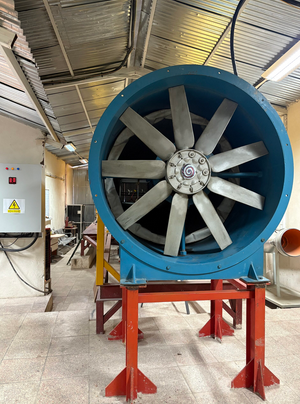
The Aerodynamics Department of College of Interdisciplinary Science and Technology of the University of Tehran has over 15 years of expertise in modeling and simulation across various fields of wind engineering. The department is equipped with both subsonic and supersonic wind tunnels, allowing for a comprehensive range of aerodynamic testing and research.
Specifications of the Subsonic Wind Tunnel:
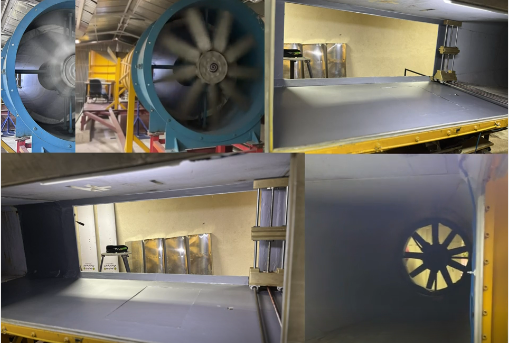
Test Section Dimensions: 100 cm (width) × 70 cm (height)
Test Section Length: 180 cm
Maximum Speed: 50 m/s
The subsonic wind tunnel features a variable honeycomb structure, which enables the adjustment of turbulence intensity to suit different testing requirements. With a maximum speed capability of 50 m/s, this facility provides an excellent opportunity for research and development in areas such as aerodynamics, wind engineering, turbulence studies, flow visualization for various models.
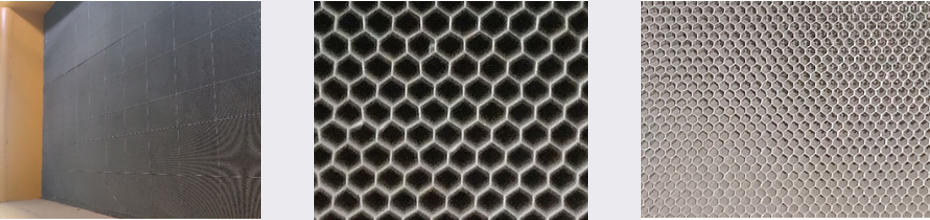
Variable Honeycomb
The honeycomb structure controls the inlet airflow and enhances the aerodynamic testing by minimizing turbulence and ensuring a uniform flow pattern. Variable honeycomb capabilities allow for changes in turbulence intensity through different cell geometries or configurations, achieving varied airflow characteristics to meet specific testing requirements and flow intensities.
Hot-Wire
A hot-wire anemometer is an instrument used to measure the velocity of flow in fluid dynamics and wind tunnel testing. It operates based on the principle of heat transfer, where an electrically heated wire is placed in the flow stream, and the cooling effect of the airflow on the wire is related to the flow velocity. This device facilitates testing across various aspects, including turbulence intensity measurement, vorticity analysis, wake modeling, and boundary layer investigations.

Travers System
The traverse system is a mechanical configuration that is utilized to move and position measuring devices within the test section in different components and directions. It is possible to automatically modify probes, sensors, or other equipment in order to record comprehensive aerodynamic data at various flow field locations.

Pressure Sensors
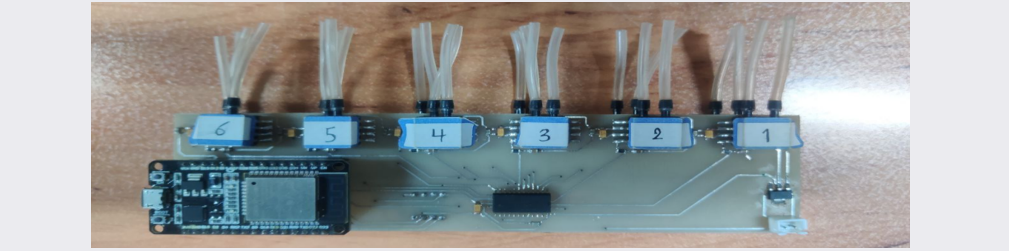
A pressure sensor is a device that measures the pressure of air or fluid flow and converts this measurement into an electrical signal. These sensors are widely used in various applications, including aerodynamic investigations, wind engineering setups, force and velocity analysis, and more.
Force Measurement System
The Force Measurement System is an instrumentation setup designed to measure forces acting on models, widely used in applications such as aerodynamics testing, structural analysis, and wind engineering. This system specifically measures lift, drag, and side force.

Pitch, Yaw, and Roll Mechanism System
The Pitch, Yaw, and Roll Mechanism System is an essential component in aerodynamic testing within wind tunnels, allowing for precise adjustments of pitch, yaw, and roll angles. This system enables a comprehensive analysis of an object’s performance under various aerodynamic conditions. It is widely used in wind tunnel testing for wind turbines and other wind engineering applications, including modeling blades and airfoils. This mechanism allows engineers to simulate and analyze real-world conditions, ultimately improving aerodynamic performance and design efficiency.
Flow Visualization System
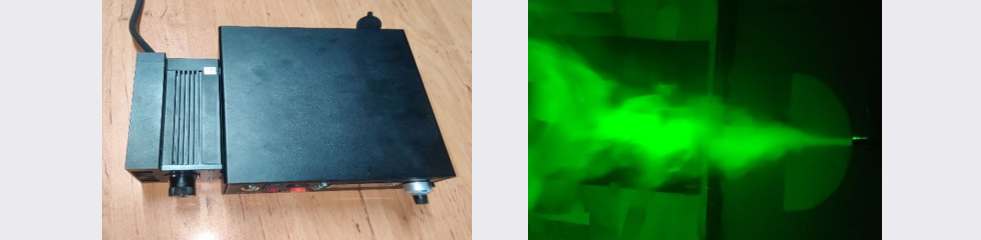
The Flow Visualization System is a crucial tool used in wind tunnel testing to observe and analyze airflow patterns around models. By employing techniques such as smoke and laser-based methods, researchers can gain valuable insights into fluid flow behavior under various aerodynamic conditions. Smoke can illustrating flow patterns, vortices, separation points and wake. This system is widely applied to analyze aerodynamic phenomena, allowing engineers to validate their work for improved performance and efficiency in various applications
Wind Turbine Simulation System
The Wind Turbine Simulation System is a facility used to test generators under load, simulating. This system utilizes rotating the turbine’s generator under different rotational conditions and loads to analyze its performance under various operating conditions.
Other Instruments
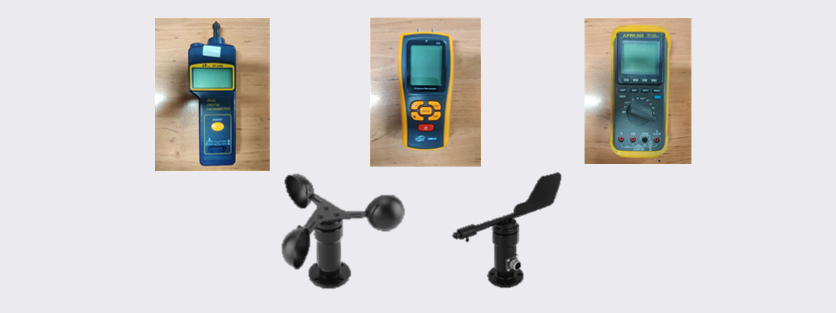
(High-Pressure Compressor, Anemometer, Wind Direction Sensor, Digital Tachometer, Digital Manometer, Newton Meter, Laser, Multimeter, and more).
Other Equipment includes an anemometer, which measures airflow velocity; a wind direction sensor, used to determine wind direction; a digital tachometer, for measuring the rotational speed of models; a digital manometer, which measures pressure; a Newton meter; a laser, which is utilized for flow visualization; and a multimeter, which measures voltage, current, and resistance in electrical systems.